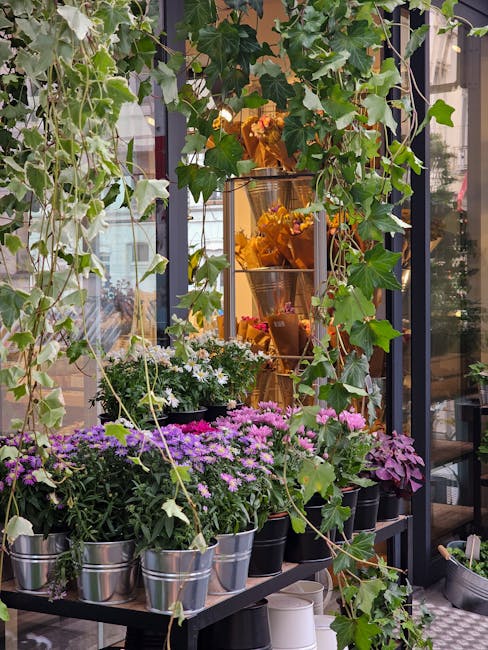
Commercial gardeners on Walworth Road shopfront planting services

Shopfront planting is one of those details people notice before they even realise they've noticed it. A tidy planter, a healthy seasonal display, or a row of evergreen structure can make a pavement-facing business feel welcoming, cared for, and more credible in seconds. That is exactly why Commercial gardeners on Walworth Road shopfront planting services matter: they combine horticultural know-how with the practical demands of a busy London frontage.
Walworth Road is not a sleepy suburban strip. It is exposed to foot traffic, road dust, changing weather, occasional vandalism, and the simple reality that most businesses do not have time to nurse delicate plants through the week. Good shopfront planting has to look good on Monday morning and still look decent by Friday afternoon. In this guide, we'll break down what these services involve, how they work, what to ask for, what to avoid, and how to get results that actually last.
If you are comparing options, planning a refurbishment, or just trying to stop your pots from looking tired after a fortnight, you're in the right place.
Why Commercial gardeners on Walworth Road shopfront planting services Matters
A shopfront is not just decoration. It is part of your brand, your footpath presence, and often your first chance to signal that you care about detail. On a busy street, that matters more than people think. A clean, planted frontage can soften hard brick, concrete, and glass. It can make a cafe feel more inviting, a salon feel more polished, and a retail entrance feel less transactional.
Commercial planting also solves problems that business owners rarely have time to manage themselves. Plants fail for predictable reasons: too much shade, too much wind, poor drainage, compacted soil, inconsistent watering, and the classic London issue of a container baking in the morning sun while the roots sit in a windy pocket by lunchtime. A commercial gardener chooses plants for the site, not for a wish list. That sounds obvious, but honestly, a lot of shopfront planting goes wrong because nobody does that first bit properly.
On Walworth Road, practical design matters. The display must sit comfortably with pavement width, sightlines, deliveries, bins, cleaning routines, and daily customer flow. It should look intentional without getting in the way. And if you've ever had a planter get knocked over by a crate trolley or a wayward umbrella, you'll know why stable, well-placed planting is more than aesthetic fluff.
There's also a subtle commercial effect. Plants change how people pause, scan, and step toward a frontage. That little moment of slowing down can make all the difference for businesses depending on walk-ins. Truth be told, some frontages do not need a complete redesign; they need the right planting in the right place, consistently maintained.
For businesses wanting a broader outdoor refresh, it can also make sense to combine planting with related upkeep such as ongoing garden maintenance or a fuller commercial gardening service so the frontage stays presentable all year.
How Commercial gardeners on Walworth Road shopfront planting services Works
Most professional shopfront planting projects follow a fairly sensible sequence. The details change depending on the site, but the basic flow is usually the same.
- Site assessment - The gardener looks at light levels, exposure, access, drainage, available frontage space, and how customers use the pavement edge.
- Brief and style discussion - You decide whether you want bright seasonal colour, evergreen structure, a minimalist look, or a more natural planting scheme.
- Plant and container selection - The right species and containers are chosen for the conditions, budget, and brand image.
- Installation - This includes soil preparation, compost or planting medium, drainage checks, spacing, and initial planting.
- Establishment care - Newly planted displays usually need more attention at first. Watering, deadheading, feeding, and adjustment happen during this stage.
- Ongoing maintenance - A good commercial setup is not "install and forget". It needs seasonal refreshes and routine care.
That maintenance part is where many businesses get caught out. A planter can look stunning on day one, then go a bit thin, dusty, or stressed within weeks if it is not serviced. Commercial gardeners think in cycles: planting season, growth phase, peak display, tidy-down, replanting. It's a rhythm, not a one-off job.
Depending on your frontage, a service may include container planting, window-box style arrangements, climbers for screening, low hedging, or structural shrubs to anchor the design. Some businesses also use planting to define queues, soften barriers, or create a visual buffer between the shop entrance and the road. That's not just nice to look at; it can subtly organise how people move.
For windier or more exposed spots, the planting plan may need tougher species and stronger containers. If your frontage catches gusts, it may be worth reading about wind control ideas for exposed spaces and pairing that thinking with the planting scheme.
Key Benefits and Practical Advantages
The best shopfront planting services deliver more than a prettier pavement. They support the business in a few practical ways that matter day after day.
1. Better kerb appeal
First impressions count. A well-planted frontage immediately feels more cared for. Even simple arrangements can make an entrance look finished rather than forgotten.
2. Stronger brand presentation
Plants can echo a business's style. Clean, modern containers suit a minimalist brand. Loose, seasonal planting can suit a friendly cafe or florist. Neat evergreens can work well for professional services. The planting becomes part of the visual identity.
3. A more welcoming atmosphere
People tend to feel more comfortable approaching businesses that look maintained. That can be especially useful for independent shops trying to stand out on a street with plenty of visual noise.
4. Flexible seasonal interest
A good commercial gardener will plan for winter structure, spring freshness, summer colour, and autumn resilience. That means the frontage does not collapse into one-note dullness after one season.
5. Less stress for the business owner
Let's face it, shop owners already have enough to juggle. Delegating planting and upkeep removes a task that is easy to neglect and awkward to do well without the right materials.
6. Better plant survival
Professionals tend to match plants with the real site conditions, which means fewer losses and less wasted spend. In practical terms, that often means less replacing, less disappointment, and fewer sad-looking gaps.
If you want low-fuss planting with a realistic maintenance profile, it is often worth exploring low-maintenance planting ideas alongside the service brief. A frontage that looks good without constant rescue work is usually the smartest spend.
Who This Is For and When It Makes Sense
This service is useful for a broad mix of businesses. You do not need a huge frontage to benefit. In fact, smaller shopfronts often gain the most because a little planting can completely change the feel of the entrance.
- Cafes and bakeries that want warmth and character
- Retail shops that need a cleaner, more polished street presence
- Salons and barbers that benefit from a stylish, calm approach
- Offices and professional practices that want a tidy, reassuring frontage
- Hospitality venues looking to soften hard edges and improve arrival experience
- Mixed-use premises where the shopfront doubles as a practical access point
It makes sense when the current frontage feels bare, inconsistent, overgrown, or simply not aligned with the quality of the business inside. It also makes sense after a rebrand, refurbishment, tenancy change, or seasonal reset. Sometimes the plants are not the problem. Sometimes the whole frontage just needs a more coherent structure.
For businesses that already have planting but can't keep it looking fresh, a professional service can step in without changing everything. A good gardener may only need to replace a few tired pots, adjust the plant mix, and introduce routine care. Small changes. Big difference.
And if you are unsure whether to go for formal or relaxed planting, you can use nearby content like professional hedge shapes for a polished look or container gardening ideas for compact spaces to help narrow your style.
Step-by-Step Guidance
If you are planning shopfront planting for the first time, this is the part that tends to make the process feel manageable. Break it into pieces. Don't rush the site thinking stage. That's where the good outcomes start.
Step 1: Assess the frontage honestly
Watch the space at different times of day. Is it shaded in the morning? Does one end get baked by afternoon sun? Is there wind funneling down the road? Does rain splash up from passing traffic? These small details matter more than the brochure version of the space.
Step 2: Decide what the planting needs to do
Is the goal colour, privacy, structure, branding, or all of the above? A planter should have a job. Otherwise it becomes another object to maintain without clear purpose.
Step 3: Choose the right container type
The container is not just a pot. It affects root health, weight, stability, and appearance. Heavy containers are often safer near busy footpaths because they are harder to tip or drag. Drainage holes matter, too. A lot.
Step 4: Pick plants for the site, not just the colour palette
Evergreens can provide reliable structure. Seasonal bedding can add quick impact. Tough grasses, climbers, and compact shrubs can perform well in challenging conditions. If shade is part of the issue, you may want to consider evergreen climbers suited to shadier spots or use ground-level planting ideas from ground cover planting for attractive coverage.
Step 5: Install properly
That means good soil, correct spacing, and a stable layout. A rushed installation is one of the main reasons shopfront planting fails early. A plant can't thrive if its roots are sitting in poor compost or waterlogged conditions.
Step 6: Build in maintenance from the start
Plan watering, pruning, feeding, and seasonal replacements before the first plant goes in. A strong maintenance routine keeps the display from drifting into neglect.
Step 7: Review after the first month
Early observation is useful. A planter may need repositioning, pruning, or a plant swap if something is not working. That's normal. Good commercial gardeners adjust. They do not pretend every first choice was flawless - which, to be fair, would be a bit suspicious.
Expert Tips for Better Results
Here are the practical points that usually make the difference between a decent frontage and one that really holds its own.
- Use repetition intelligently. A repeated plant or container style creates order. Too many different textures can make the frontage look busy.
- Balance height and width. Tall planting can add presence, but it must not block sightlines or create awkward congestion.
- Prioritise sturdy species for exposed streets. Plants that collapse in wind or scorch in direct sun are expensive mistakes.
- Keep a winter plan. Many shopfronts look great in summer and empty in January. Structure matters in the colder months.
- Choose colour with intent. Bright planting can help a business stand out, but too much can cheapen a refined frontage.
- Keep maintenance practical. If watering access is awkward, the design needs to account for that from day one.
- Pair planting with other frontage care. Clean paving, tidy edges, and well-kept boundaries help planting look more intentional.
A helpful habit is to think in terms of "view from the pavement" and "view from the doorway". Those are not always the same thing. You might have a lovely planter that looks wonderful from five metres away but crowds the threshold when a delivery arrives. Small planning issue, big daily annoyance.
For businesses seeking broader frontage polish, a garden transformation mindset and functional seating ideas can also help shape a more coherent outdoor look, especially where customers linger.
Common Mistakes to Avoid
Most shopfront planting problems are surprisingly preventable. The trouble is, they look minor at the start.
- Choosing plants for appearance alone. A pretty plant that hates the site is a short-term win and a long-term headache.
- Using light containers in a public area. They can shift, tip, or blow about more easily.
- Ignoring watering access. If watering is inconvenient, it usually becomes inconsistent.
- Overcrowding the frontage. More plants does not always mean better impact.
- Forgetting seasonal change. What works in May can look tired by October.
- Letting weeds establish. Once weeds settle into containers, they can be oddly stubborn. Like they've moved in properly.
- Neglecting leaf litter and debris. A neat planter can look messy quickly if rubbish collects around it.
Another frequent issue is selecting plants that grow too aggressively for the space. Climbers, in particular, need careful management. If ivy or clinging plants are a concern, it may help to read advice on achieving an ivy-free garden before deciding how much vertical planting you actually want.
One more thing: avoid treating the frontage like a one-time design decision. It is more like an evolving display. The best commercial gardeners know when to refresh, trim, or simplify. And sometimes simplifying is the smartest move.
Tools, Resources and Recommendations
Shopfront planting does not require a mountain of equipment, but good results depend on the right basic kit and a sensible maintenance routine.
Useful tools and materials
- Quality containers with drainage
- Good planting compost and mulch
- Hand trowels and secateurs
- Watering cans or hose access suitable for the site
- Plant supports or ties where needed
- Weed control materials for container edges and surrounds
- Winter protection materials for sensitive plants
Helpful planning ideas
- Choose a planting palette that matches the building's style.
- Use at least one evergreen feature for structure.
- Mix texture as well as colour.
- Keep maintenance reachable - literally. If you can't access it easily, it will suffer.
There are also broader gardening topics that can support better frontage planning. For example, sustainable soil care often improves container health, so organic waste and soil sustainability ideas may be useful where the planting is soil-based rather than purely decorative. Likewise, a more climate-conscious approach to cultivation can help when choosing resilient species that cope better with changing weather.
If you want a frontage that keeps going through wetter months, it can also help to think about winter plant protection and weather-resistant planting. A few simple precautions can save a lot of replacement cost.
Law, Compliance, Standards, or Best Practice
Commercial shopfront planting in London is usually more about practical best practice than about a single dramatic rulebook, but there are still a few important considerations.
First, anything placed on or near the public footpath should not create a hazard. That means avoiding trip risks, maintaining clear pedestrian routes, and being careful with container placement. It also means thinking about visibility for customers, drivers, and delivery staff. A plant display should enhance access, not obstruct it.
Second, where watering, lifting, pruning, or public-facing work is involved, a professional approach to safety matters. Good commercial gardeners work with sensible risk controls, use stable equipment, and plan tasks so the frontage stays safe while work is underway. If you are assessing a provider, ask how they handle site safety and routine maintenance. You may also want to review insurance and safety information plus the company's health and safety policy.
Third, if a business is handling customer data, payments, or enquiries linked to a service booking, standard privacy and payment expectations still matter. That's not a planting issue as such, but it is part of trusting a provider with your business. In that sense, documents such as privacy information, payment and security details, and the terms and conditions all help set expectations clearly.
Best practice also includes transparent quoting. A good provider should explain whether planting installation, seasonal swaps, watering visits, and waste removal are included. If that's unclear, ask. Simple enough, but very often skipped.
Options, Methods, or Comparison Table
Not every frontage needs the same approach. Here is a practical comparison of the most common methods used by commercial gardeners for shopfront planting.
| Method | Best for | Advantages | Watch-outs |
|---|---|---|---|
| Seasonal bedding in containers | High visual impact and colour | Flexible, bright, easy to refresh | Needs regular replacement and watering |
| Evergreen container planting | Year-round structure | Reliable, tidy, low drama | Can look static if not layered well |
| Climbing or vertical planting | Small spaces and walls | Uses height without taking floor space | Needs support and ongoing management |
| Mixed planting schemes | Balanced, premium frontage design | Combines structure, colour, and texture | Requires better planning to avoid clutter |
| Minimalist planters | Modern commercial settings | Clean, refined, easy to read visually | Can feel sparse if under-designed |
A lot of people assume seasonal colour is always the best option. Not really. If the business wants a sophisticated feel, a strong evergreen base with selective seasonal accents often looks better and costs less to maintain over time. It is calm. It works. No fuss.
For narrower frontages, you may also want to look at vertical gardening approaches or compact container methods. And if privacy is part of the brief, fast-growing hedge ideas can be useful in the right setting, though shopfronts need careful scale control.
Case Study or Real-World Example
Imagine a small independent shop on Walworth Road with a narrow paved frontage, a glass door, and two tired containers near the entrance. The pots are mismatched, one plant has thinned out, and the whole scene looks a bit apologetic. Not awful. Just tired.
A commercial gardener would likely start by simplifying the layout. Instead of cluttering the space with more pots, they might introduce two matching, sturdy containers with evergreen structure, one lower seasonal planting band, and a more resilient plant choice for the wind exposure. If there is a wall or fence edge nearby, a restrained climber or trained vertical element might add depth without narrowing the access point.
After installation, the frontage would need a short establishment period with regular watering and checks. Then a maintenance rhythm would keep it tidy: deadheading, leaf removal, plant replacement where needed, and a seasonal refresh so the display doesn't become tired in late summer. Nothing glamorous, really. Just good practice done consistently.
The result is usually not a dramatic transformation overnight, but something more valuable: the shop starts looking deliberate. People slow down. The business looks cared for. And if you've ever watched a passer-by glance twice at a frontage, you'll know how powerful that can be.
This is why some businesses also pair planting with broader frontage transformation work or use calmer design ideas to shape the overall mood. Not everyone wants the same look, of course, but the principle is the same: make the entrance feel intentional.
Practical Checklist
Use this as a quick planning sheet before you commission shopfront planting.
- Assess light, shade, wind, and drainage at the frontage
- Decide whether the priority is colour, structure, privacy, or branding
- Choose containers that are stable and proportionate
- Select plants that suit the actual site conditions
- Make sure the design keeps walkways clear
- Plan watering access and maintenance frequency
- Check how the display will look in winter, not just summer
- Ask what is included in planting installation and upkeep
- Confirm waste removal and seasonal replacement arrangements
- Review safety, insurance, privacy, and payment terms before starting
Expert summary: The strongest shopfront planting schemes are not the fanciest ones; they are the ones that fit the site, survive the weather, and still look like they belong to the business after a busy week on the road.
Conclusion
Commercial shopfront planting is one of the easiest ways to improve a business frontage without getting into major building work. Done well, it softens hard edges, improves kerb appeal, supports brand identity, and makes the whole place feel looked after. Done poorly, it becomes another weekly problem. The difference is usually in the planning, the plant choice, and whether maintenance was considered from the beginning.
For businesses on Walworth Road, the best results come from practical design with a human touch: plants that can take real street conditions, containers that stay put, and a maintenance rhythm that keeps everything fresh. No theatrics needed. Just a frontage that feels alive and well cared for, day after day.
If you are ready to turn a tired entrance into something more inviting, start with a conversation about site conditions, style, and upkeep. That first step is usually the one that makes the rest feel much easier.
Get a free quote today and see how much you can save.
Frequently Asked Questions
What do commercial gardeners on Walworth Road shopfront planting services usually include?
They usually include site assessment, plant and container selection, installation, and ongoing maintenance such as watering, pruning, deadheading, and seasonal refreshes. Some providers also handle waste removal and replacement planting.
How often does shopfront planting need maintenance?
It depends on the scheme, the season, and how exposed the frontage is. Busy streets and container displays often need weekly or fortnightly attention, especially during warmer months. Winter usually needs less frequent but still consistent care.
Is seasonal planting better than evergreen planting for a shopfront?
Neither is automatically better. Seasonal planting gives colour and change, while evergreen planting gives structure and reliability. Many of the best displays combine both, so the frontage looks good all year and still feels fresh through the seasons.
What plants work best for exposed urban shopfronts?
Tough, compact, and resilient plants usually perform best. That might include hardy evergreens, structured shrubs, some grasses, and carefully chosen seasonal varieties. The right answer depends on sun, shade, wind, and how much watering access you have.
Can a small shopfront still benefit from professional planting?
Yes, often more than larger frontages. A small entrance only needs the right detail to look much more welcoming. Even one or two well-designed planters can make a noticeable difference.
How much upkeep does a planted shopfront need?
That depends on the design. High-colour seasonal displays need more upkeep, while evergreen and mixed schemes are usually easier to manage. A good commercial gardener will recommend a level of care that fits your budget and your schedule.
Will planting get in the way of customers or deliveries?
It should not. A professional installation should preserve clear access, avoid trip hazards, and leave enough room for foot traffic, deliveries, and day-to-day operations. If space is tight, the design should be simplified accordingly.
What should I ask before booking a shopfront planting service?
Ask what is included, how often maintenance is needed, what happens if plants fail, whether watering is covered, and how waste is managed. It's also sensible to ask about insurance, safety, and quoting in plain English.
Can planting be used to add privacy or screening?
Yes, but carefully. Taller planting, climbers, or narrow hedging can help with screening, though shopfronts need to stay open and safe. The trick is balancing privacy with visibility and public access.
What is the biggest mistake businesses make with shopfront planting?
Choosing plants or containers without considering the actual site conditions. A frontage can look perfect in a plan and still fail quickly if it is too windy, too shaded, or hard to water. Site fit matters more than style alone.
Should I combine planting with other frontage services?
Often yes. Clean paving, tidy boundaries, and broader maintenance make the planting look much better. For some businesses, combining it with related upkeep such as patio cleaning, lawn care, or even landscaping helps create a more complete finish.
How do I choose between a formal and a relaxed planting style?
Think about your brand, your building, and how customers approach the entrance. Formal planting feels neat and controlled. Relaxed planting feels softer and more welcoming. The right choice is the one that looks natural for the business rather than forced.
Where should I start if I want to improve my shopfront planting now?
Start with a simple review of the current frontage: what is working, what is tired, and what is getting in the way. Then speak to a commercial gardener about light, exposure, maintenance, and the look you want. A good plan usually begins with honest observation, not a shopping list.